Redefining multi generational space: from bedroom tally to private zones
Most multigenerational travelers start their vacation search by filtering for bedroom count and little else. For a true three generation getaway, the real multigenerational vacation house rental requirements begin with how those bedrooms connect, separate, and protect sleep for every age. A large villa with eight bedrooms can still fail a generational family if sound travels through thin doors and there is no quiet corner for a nap.
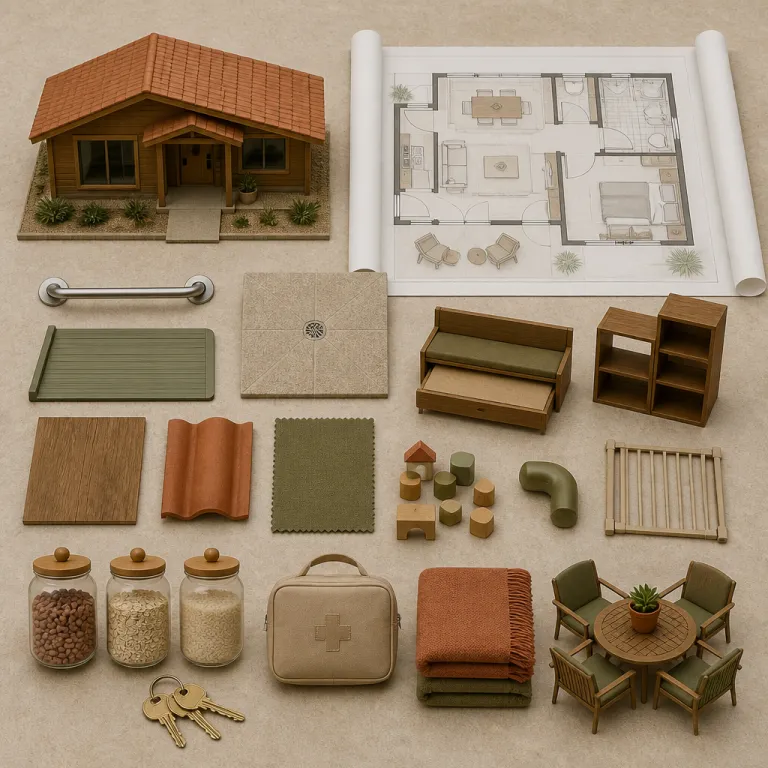
Architects working on homes for three generations talk less about a single bedroom and more about “private zones” that cluster sleeping spaces with en suite bathrooms and small sitting areas. In practice, that might mean a primary suite for grandparents on the entry level of the property, a kids wing upstairs near cousins, and perhaps a separate entrance suite for new parents who need to step away from the group. These flexible floor plans match what multigenerational family travelers now expect from luxury vacation rentals, especially when they are paying premium rental rates for a long term stay.
Research on multigenerational living shows why this matters; a 2022 Pew Research Center report found that multigenerational households in the United States rose from about 7 million in 1971 to nearly 18 million people in 2021, with growth driven by families seeking both connection and privacy. Guidance from the American Institute of Architects and the National Association of Realtors highlights three essentials for multigenerational homes: separate living spaces, accessible features, and generous communal areas. When you evaluate any vacation rental or beach house listing, read the floor plan as carefully as the décor, because the social flow between private and shared rooms will shape the entire family vacation.
For a multigenerational family planning a big trip, this means asking sharper questions before booking. How far is the kids bunk room from the grandparents suite, and can late night family members return from the beach without waking everyone? In the most successful vacation homes, each generational family can retreat to its own cluster of rooms, then rejoin the group in shared spaces that feel generous rather than crowded. A quick checklist helps: at least one quiet bedroom zone on the main level, doors that close between kids and adults, and one extra small room that can flex between nursery, office, or overflow guest space.
The kitchen and living core: where a multigenerational vacation actually happens
If bedrooms protect rest, the kitchen and living areas host the real vacation, especially for large groups that cook rather than dine out every night. Multigenerational vacation house rental requirements should always include a stress test of the kitchen, dining, and lounge spaces, because this is where family travel either feels effortless or claustrophobic. Picture twelve family members trying to prepare breakfast at the same time while kids weave between stools and someone hunts for coffee mugs.
When you review vacation rentals online, imagine a full group in every frame of the photos, not just a couple posed by the island. Look for a dining table that truly seats the whole family, a secondary breakfast bar for kids, and circulation space of at least 1.1–1.2 m around key counters so people can pass without collisions; this aligns with common residential design guidance that recommends roughly 42–48 inches of clearance for comfortable movement. A luxury villa that claims to sleep sixteen but only offers eight dining chairs is not aligned with serious multigenerational vacation expectations.
Living rooms in high end vacation homes should offer multiple seating clusters rather than one oversized sofa, allowing a generational vacation to split naturally into card games, quiet reading, and late night conversations. Privacy focused travelers increasingly choose houses over hotels, a shift explored in depth in this analysis of why privacy is the new amenity for multigenerational travel. For your own family vacation, ask whether the main living area can host the full group on a rainy day at the beach without anyone perching awkwardly on the floor, and count actual seats: one comfortable place per person indoors and outdoors is a practical target.
Destination also shapes these spatial needs, whether you are booking a beach house in the Outer Banks, a villa near Gulf Shores, or a refined property in Turks Caicos. Coastal vacation ideas often revolve around outdoor living, but wind, sun, and sand can push everyone back inside for long stretches of time. A thoughtful vacation rental will anticipate this with durable fabrics, generous storage for beach gear, and enough side tables for drinks during those long evenings when no one wants the trip to end.
Outdoor architecture for togetherness and retreat across generations
On a multigenerational vacation, the terrace and garden often work harder than any bedroom, because they host everything from toddler paddling to late night wine debates. Multigenerational vacation house rental requirements should therefore treat outdoor space as a second living room, not an afterthought tagged onto the property listing. The best vacation homes choreograph sun, shade, and views so that every age group finds its own corner without fragmenting the family.
When you scroll through vacation rental photos, study how the pool, deck, and dining terrace relate to the interior kitchen and lounge. A beach house that forces you to cross a car park to reach the sand will feel very different from one where sliding doors open directly from the family room to a shaded dining table. For inspiration on coastal layouts that balance privacy and connection, examine the elegant beach houses in the Canary Islands featured in this guide to refined coastal escapes with generous outdoor living.
Multigenerational groups should look for at least two distinct outdoor zones; perhaps a quiet garden terrace for grandparents and a more animated pool deck for kids and teens. In destinations like Turks Caicos or Gulf Shores, where the beach is the main stage, a covered veranda becomes essential for long term stays that stretch beyond a quick weekend trip. A well designed villa will also provide outdoor showers, storage for beach gear, and safe circulation routes so wet kids do not sprint through the main living room every time they return from the sea.
Desert and mountain properties follow the same logic, even if the view swaps waves for ridgelines, as shown by many refined desert homes such as those highlighted in this overview of Paradise Valley vacation rental escapes. For a generational family, the goal is always the same; outdoor architecture should allow the group to gather around one long table, then peel off into smaller conversations without anyone feeling exiled. When a rental achieves that balance, the family travel memories tend to center on evenings outside, not on queues for the bathroom.
Accessibility, flexibility, and the quiet power of good planning
Accessibility is often the missing line in multigenerational vacation house rental requirements, yet it can determine whether grandparents actually join the trip. A property with a single step at the entrance, narrow corridors, or steep stairs between the kitchen and terrace can quietly exclude older family members or anyone with limited mobility. For a multigenerational family, the most luxurious amenity may simply be a level threshold and a handrail where it matters.
Designers who specialise in multigenerational living emphasise three pillars: accessible features, separate living spaces, and generous communal areas. The American Institute of Architects notes that accessibility in multigenerational homes ensures comfort for all ages and abilities, a principle that translates directly to vacation rentals. When you assess vacation rentals, turn that into concrete checks such as lift access, ground floor bedrooms, grab bars in at least one bathroom, and minimal distance from parking to the front door.
Flexible floor plans also support changing needs over the duration of a long term stay, especially when different family members arrive and depart at different times. The same annex that hosts grandparents at the start of the vacation might later become a quiet office for someone extending the trip with remote work. For large groups, sliding partitions, pocket doors, and convertible media rooms can turn a single property into several overlapping zones that adapt to the rhythm of the family vacation.
Real estate professionals who specialise in vacation homes for generational vacation use increasingly talk about “future proofing” layouts for repeat stays. A family that returns to the same beach house in the Outer Banks or Turks Caicos every few years will experience different multigenerational dynamics as kids grow and elders age. Choosing a rental with accessible design and flexible space today means your next multigenerational vacation can evolve gracefully rather than forcing a complete change of destination.
Booking mechanics and reading between the lines of a listing
Once you understand your multigenerational vacation house rental requirements, the final challenge is translating them into a smart booking strategy. Large groups face more complex logistics than a couple planning a quick city break, from split payments to stricter cancellation policies. A clear plan protects both the family and the homeowner, especially when the rental involves high value real estate and a long term stay.
Start by mapping your actual headcount and relationships: kids, grandparents, siblings, partners, and any close friends joining the trip. Then match that to the property description, checking that the number of real beds, not just “sleeps” figures, aligns with your multigenerational family structure. For example, a villa that lists four bedrooms and two sofa beds might work for a nuclear family vacation but feel strained for a generational family of twelve.
Booking platforms and dedicated vacation rentals agencies now offer tools for rentals multi scenarios, such as shared payment links and transparent damage deposit rules for ten or more guests. Before you commit, ask the manager to walk you through occupancy limits, visitor policies, and any extra fees for large groups, especially in tightly regulated coastal markets like Gulf Shores or the Outer Banks. Clarifying these details early prevents awkward conversations mid stay when extra family members appear for a few nights.
Finally, learn to read listing photos and floor plans as if you were an architect, not just a traveler dreaming about the beach. The National Association of Realtors highlights how flexible floor plans benefit multigenerational living by adapting to changing family needs over time. Apply that lens to every vacation rental you consider, and you will quickly separate generic rentals from those rare vacation homes that genuinely support three generations under one roof. As a simple floor plan test, trace how you would move from parking to bedrooms, to kitchen, to terrace, and note any tight stairs, missing bathrooms, or bottlenecks where the whole group might queue.
FAQ
What is the single most important feature for a multigenerational vacation house?
The most important feature is a layout that balances private zones with generous shared spaces. Separate sleeping clusters with bathrooms for each generation reduce friction, while a large kitchen and living area keep the group connected. When those elements work together, the specific destination or beach becomes secondary to the quality of the stay.
How many bedrooms should I plan for a three generation family vacation?
As a baseline, plan at least one bedroom per couple, one for grandparents, and one flexible room for kids or teens. Large groups often benefit from an extra small bedroom that can switch between childcare, quiet work, or a guest overflow. Focus less on the raw bedroom count and more on how those rooms are grouped and accessed.
Why is accessibility so important in multigenerational vacation rentals?
Accessibility ensures that older relatives and anyone with mobility challenges can participate fully in the trip. Features such as level entry, ground floor bedrooms, and grab bars in at least one bathroom make a property more inclusive without compromising style. These details often determine whether grandparents feel confident joining a long term family stay.
How can I judge a property’s social flow from listing photos?
Look for clear sightlines between the kitchen, dining area, and main terrace, as well as enough seating for the full group in both indoor and outdoor spaces. Check whether circulation paths seem wide and unobstructed, and whether there are smaller nooks for reading or kids play. If photos feel cramped or disjointed, the social flow in person will rarely improve.
Are large villas better than several smaller rentals for multigenerational trips?
A single large villa usually creates stronger shared memories because everyone gathers around the same table and pool. Multiple smaller rentals can offer more privacy but often dilute the sense of togetherness that defines a generational vacation. For most families, one well designed property with flexible zones is the more rewarding choice.
Sources
Pew Research Center, “The Growing Number of Multigenerational Households in the U.S.” (2022), which reports that nearly 18 million people lived in multigenerational households in 2021, more than double the 1971 figure; American Institute of Architects, Design for Aging and Multigenerational Housing resources; National Association of Realtors, reports on housing preferences for multigenerational families.