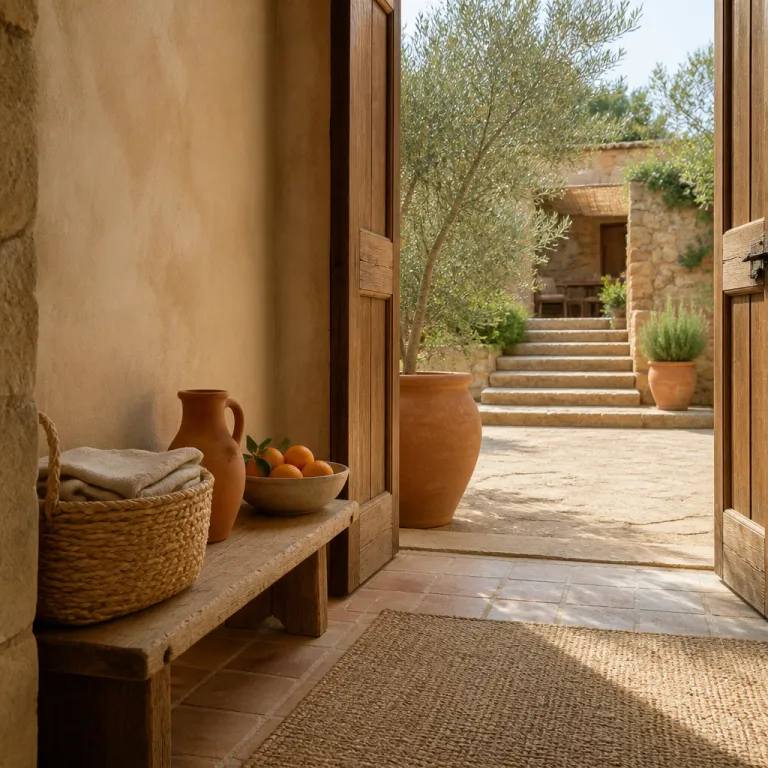
The quiet choreography of a luxury villa arrival experience
You feel it before you see it; the best luxury villa arrivals slow your breathing before the key even turns. In those first few minutes, the luxury villa interior design arrival experience quietly tells you whether this is just another rental or one of the finest villas you will remember for years. Every decision about light, materials, spatial rhythm, and privacy has already been made for you, and you read it instinctively.
In hospitality research, the 2020 J.D. Power North America Hotel Guest Satisfaction Index Study found that guests rating check-in as “excellent” were far more likely to give top scores to their overall stay; it confirms that the arrival sequence is not decorative but decisive. Villa owners and concierge équipes now treat the welcome as a designed event, using pre-arrival communication, trained staff, and subtle technology to create a guest experience that feels effortless yet highly curated. When you book luxury villas through a serious platform or specialist agency, you are not only choosing a villa design or a view, you are choosing how those first minutes of living in the space will feel.
Think of the arrival as a narrative arc rather than a door and a lock. The path from driveway to foyer, the first sightline into the living room, the way natural light or soft lighting hits natural stone or timber, all of this is villa architecture speaking directly to your senses. A thoughtful host will create a spatial sequence that moves from public to more private zones, so your experience shifts from travel fatigue to grounded calm almost without you noticing.
Reading the foyer and threshold like a seasoned design critic
When you step into the foyer, you are stepping into the villa’s thesis statement. A strong luxury villa interior design arrival experience uses this compact space to create clarity about how you will live here, from where you drop your bags to how you transition toward the living areas and outdoor living zones. Look for a focal point that anchors the eye, whether it is a framed view, a sculptural staircase, or a single piece of furniture that quietly commands the room.
The best villa architecture treats the foyer as a hinge between the outside world and the private interior, not as a leftover corridor. You should feel a deliberate shift in temperature, scent, and lighting as you cross the threshold, with soft lighting layered over natural light so your eyes adjust gently after travel. Stone underfoot, timber on the walls, or a single slab of natural stone used as a console can signal that materials have been chosen for both tactility and local relevance, not just for a catalog look.
Before you book, train yourself to read listing photos of foyers and entrances with the same care you give to pools and views. Properties that understand arrival sequence will show you the path from door to living room, not only isolated décor shots, and you can learn how to read between the lines of a vacation house listing by focusing on these transitions rather than only on hero images. If the images reveal a cramped space with no clear circulation, little natural light, and no sense of privacy from the street, the arrival experience will likely feel improvised rather than intentionally designed.
Light, height, and spatial drama in the first five minutes
Light is the first material you feel in a luxury villa, long before you notice fabrics or art. A refined luxury villa interior design arrival experience uses lighting to create a gentle gradient from exterior glare to interior calm, often combining morning light from clerestory windows with soft lighting at floor and ceiling level. When you enter, your body should register a change in pace as the lighting design guides you toward the living room or terrace without a single verbal instruction.
Many ultra luxury villas now use double-height entrance halls or living spaces to create a sense of release after the compression of travel. This vertical expansion is not only visual theatre; it is a spatial reset that tells your nervous system you have arrived somewhere generous, with enough space for your thoughts to stretch out. When double-height volumes are paired with warm, moody palettes and carefully controlled lighting, you get the kind of atmospheric interiors explored in the dark walls and warm textures design mood shift now defining many contemporary villas.
Pay attention to how villa design handles transitions between indoor and outdoor zones in those first minutes. Sliding doors that align floor-to-ceiling tracks, continuous stone or natural stone flooring that runs from foyer to terrace, and consistent lighting temperatures all help create a seamless experience of space rather than a series of disconnected rooms. If the arrival sequence already balances openness with privacy and natural light with shade, you can expect the rest of the interior design to be equally considered.
Materials, locality, and the kitchen as emotional anchor
In a serious luxury villa, materials are never neutral; they are the first conversation between you and the landscape. The most compelling luxury villa interior design arrival experience uses local materials to create a sense of place, whether that means volcanic stone in a coastal retreat or reclaimed timber and natural stone in a mountain hideaway. When your hand meets a cool stone wall or a warm wooden handrail in the foyer, you are already in dialogue with the region beyond the gates.
Current villa architecture trends lean toward hyper-localization, where every material choice mirrors the surrounding geography and culture. This is where the finest villas distinguish themselves from generic luxury villas, commissioning local artisans to create custom pieces that blur the line between furniture and architecture, a movement explored in depth in this guide to hyper-localized vacation house design. As a guest, you feel this immediately in the arrival sequence, where a carved stone bench, a handwoven runner, or a locally fired ceramic lamp quietly signals that your stay is rooted in its setting rather than floating above it.
Do not underestimate the role of the kitchen in this early choreography of space and experience. Many of the best villa design teams now route you past the kitchen within the first five minutes, using the sight of a stocked counter, a bowl of local fruit, or a chilled bottle as a focal point that promises long-term comfort and shared living. When the kitchen is visually connected to the foyer and living room yet still offers enough privacy for real cooking, you know the interior design has been planned around how couples and families actually inhabit the villa, not just how it photographs.
From private retreat to outdoor living: designing the full arrival arc
The most memorable luxury villa stays treat the arrival not as a single moment but as a full arc that extends from gate to terrace. A well-considered luxury villa interior design arrival experience will move you through a series of spatial thresholds, from the semi-public driveway to the private foyer, then into the living room and finally out toward outdoor living areas. Each step should feel like a deepening of privacy and comfort, not a jarring jump between unrelated spaces.
Look for villas where indoor–outdoor transitions are handled with the same care as the front door. When you can see a glimpse of water, garden, or horizon from the first interior space, the arrival sequence sets an emotional register that will color every breakfast and every late-night conversation. Morning light spilling across a stone floor, a shaded terrace framed as a focal point from the living room, and consistent materials underfoot all help create a continuous experience rather than a patchwork of zones.
For couples planning a long-term stay, this continuity matters more than any single design gesture. You want a villa where the guest experience of arrival still feels quietly special on day ten, when the novelty has worn off but the rituals remain. When villa architecture, lighting, material choices, and spatial planning all work together from the first five minutes, the property stops feeling like a rental and starts feeling like a private home you simply have not lived in yet.
FAQ
Why is the arrival experience in a villa so important?
The arrival experience sets the emotional tone for your entire stay, influencing how safe, relaxed, and welcomed you feel. Research from hotel and villa sectors consistently shows that when guests rate check-in as excellent, they are significantly more likely to rate the overall stay at the highest level. In a luxury villa, those first five minutes reveal the quality of design, privacy, and service you can expect in every other room.
What should I look for in listing photos to judge the arrival sequence?
Focus on how the images show the path from entrance to foyer, then from foyer to living room and terrace. You want to see clear circulation, natural light, and a sense of privacy from the street or neighboring villas, not just isolated décor shots. If the photos reveal a coherent spatial flow and consistent materials, the arrival experience is likely to feel intentional rather than improvised.
How can I tell if a villa uses quality materials and lighting at the entrance?
Look for visible natural stone, timber, or other tactile materials in the foyer and entrance hall, rather than thin finishes that feel generic. Good lighting design will combine natural light with layered soft lighting, avoiding harsh downlights that flatten the space. When these elements are present together, the villa usually offers a higher level of comfort and design throughout.
What role does technology play in a luxury villa arrival?
Technology should streamline the practical side of arrival without overwhelming the sense of calm. Pre-arrival communication, digital directions, and keyless entry can make check-in smoother, while subtle climate control and lighting presets ensure the interior feels immediately comfortable. The goal is a guest experience that feels personal and human, with technology quietly supporting rather than dominating the first moments.
How early should I communicate my arrival time to the villa owner or concierge?
It is wise to share your estimated arrival time at least a few days in advance, then update it on the day if your plans change. This allows the host or concierge team to prepare the villa, adjust lighting and temperature, and arrange any welcome amenities or local refreshments. Clear communication helps transform a simple check-in into a thoughtfully orchestrated welcome.